

You want to know where your Member of Parliament stands on the issues you care about. That makes sense. Your MP represents you in Ottawa.
Most people start by looking at voting records. They check how their MP voted on bills. Did they vote yes or no on healthcare funding? What about climate policy or housing?
Voting records tell you something. But they don't tell you everything.
What Voting Records Actually Show
An MP voting record shows how your representative voted on bills in the House of Commons. Every time Parliament votes on a bill, the vote gets recorded. You can see if your MP voted yes, no, or didn't vote at all.
These records are public. Anyone can look them up. They help Canadians track what happens in Parliament.
But here's the problem. A vote doesn't explain why your MP voted that way. It doesn't show what they actually think about an issue.

The Party Line: Why MPs Vote Together
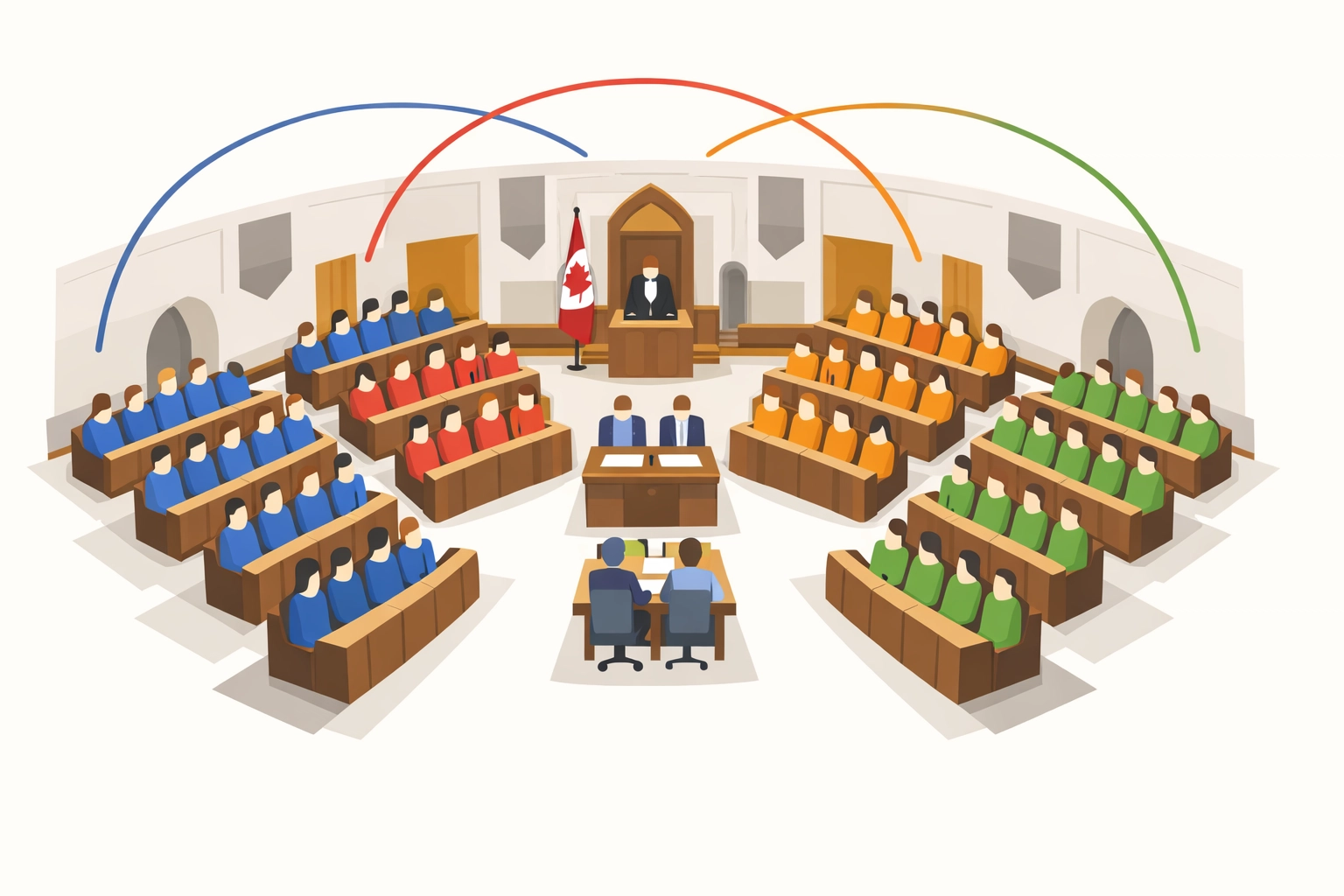
In Canadian politics, most MPs vote with their party. This is called voting "along the party line."
Each party has a party whip. The whip's job is to make sure MPs vote the way party leadership wants. If you're a Liberal MP, you usually vote the way Liberal leadership decides. Same for Conservative MPs, NDP MPs, Bloc MPs, and Green MPs.
This system keeps parties united. It helps them push their agenda through Parliament.
But it also means your MP might vote differently than they personally feel. They might have concerns about a bill. They might want changes. They might even disagree with parts of it.
The vote doesn't show any of that.
When MPs Must Follow the Party
Most votes in Parliament are "whipped votes." This means party leadership expects all MPs to vote the same way.
If an MP votes against their party on a whipped vote, there can be consequences. They might lose their role on a committee. They might not get chosen for important positions. In serious cases, they could even get kicked out of their party.
Some votes are "free votes." MPs can vote however they want without pressure. But free votes are rare. They usually only happen on specific moral or ethical issues.
The rest of the time, MPs vote with their party. The voting record shows party position, not personal position.
What Voting Records Miss
Your MP does more than just vote. They speak in Parliament. They ask questions. They sit on committees. They talk to the media. They meet with community groups.
In these moments, MPs share their real thoughts. They explain their concerns. They suggest changes to bills. They highlight issues their constituents care about.
An MP might vote yes on a bill but spend weeks criticizing parts of it. Another MP might vote yes but push hard for amendments behind the scenes. A third MP might vote yes but publicly say the bill doesn't go far enough.
All three MPs have the same voting record. But they have very different positions.
Why Quotes and Statements Matter
When MPs speak, they reveal their true stance. Their words add context to their votes.
Maybe your MP voted for a housing bill. But did they praise it as a great solution? Or did they say it's not enough but better than nothing?
Maybe they voted against an environmental bill. But did they oppose it because they don't care about climate change? Or because they wanted stronger measures?
The quote makes all the difference.
Quotes also show when MPs change their position. An MP might say one thing during an election campaign and something different after getting elected. They might support an idea in opposition but oppose it in government.
Tracking what MPs actually say helps you hold them accountable.

Real Examples from Canadian Politics
Look at any major bill in Parliament. You'll find MPs from the same party who voted the same way but said very different things.
Some MPs celebrate the bill as a victory. Others criticize it but vote for it anyway because their party told them to. Some stay quiet. Others speak up about specific concerns.
The voting record shows unity. The quotes show disagreement, debate, and different priorities.
This happens across all parties. It's not about partisan politics. It's about how Parliament works.
Committee Work and Public Statements
MPs do important work outside of voting. They sit on committees that study bills in detail. They hold hearings. They question experts and government officials.
In committees, MPs often speak more freely. They ask tough questions. They push for changes. They work across party lines.
MPs also give media interviews. They post on social media. They speak at community events. They write op-eds.
All of these statements show their real position on issues. But they don't show up in voting records.
How PolicyShift Tracks the Full Picture
PolicyShift tracks what MPs say, not just how they vote. The platform collects quotes from published news articles. It organizes them by topic and by MP.
You can see exactly what your MP said about healthcare, housing, climate change, or any other issue. You can compare what they said last year to what they're saying now. You can spot when their position shifts.
This gives you the full story. Not just the vote, but the words behind the vote.

Why This Matters for You
You vote based on what politicians promise. You should be able to track if they keep those promises.
But if you only look at voting records, you miss important information. You can't see if your MP fought for your priorities. You can't tell if they tried to improve a bill or just went along with it.
Quotes show effort. They show priorities. They show whether your MP speaks up for the issues you care about.
When election time comes, you'll want this information. Did your MP stay consistent? Did they advocate for your community? Did they raise the issues that matter to you?
You can't answer these questions with voting records alone.
Beyond Partisan Politics
This isn't about one party being better than another. All parties use whipped votes. MPs from all parties face pressure to vote with their leadership.
The point is to give you accurate information. You deserve to know what your MP really thinks and what they're actually saying.
Democracy works better when voters have complete information. That means tracking both votes and words.
Finding Your MP's Position on Issues
Start by looking up your MP on PolicyShift. You can search by name or by your postal code.
You'll find their voting record. But you'll also find their statements organized by topic. Click on an issue you care about. Read what they've said in their own words.
Compare their statements over time. See if their position changed. Look for specific details about their stance.
This takes a few minutes. But it gives you a much clearer picture than voting records alone.

Holding MPs Accountable
Politicians respond to informed voters. When you know what they said and when they said it, you can ask better questions.
You can email your MP and reference their specific statements. You can ask them to explain a position. You can point out when their actions don't match their words.
This is how democracy should work. Voters track what politicians say and do. Politicians know voters are paying attention.
The more Canadians use tools like PolicyShift, the more accountable MPs become.
The Full Story Matters
Your MP's voting record is part of their story. But it's not the whole story.
To understand where your representative really stands, you need to hear their words. You need to see what they say when they're not just following the party line.
That's why tracking quotes matters. That's why the full picture matters.
Next time you want to know your MP's position on an issue, don't stop at the voting record. Look at what they actually said. Read their statements. Watch for changes.
You'll get a much better sense of who they are and what they stand for.
That's the information voters deserve.