Something unusual has happened in Canadian politics over the past year.
Politicians who had clear, stated positions on defence, trade, and Canada's place in the world have quietly — and sometimes not so quietly — changed their minds. Not because of an election. Not because of a scandal. Because of pressure from south of the border.
This is the Trump Effect. And PolicyShift's data shows it happening in real time.
Canada Backed U.S. Strikes on Iran. Then It Didn't.
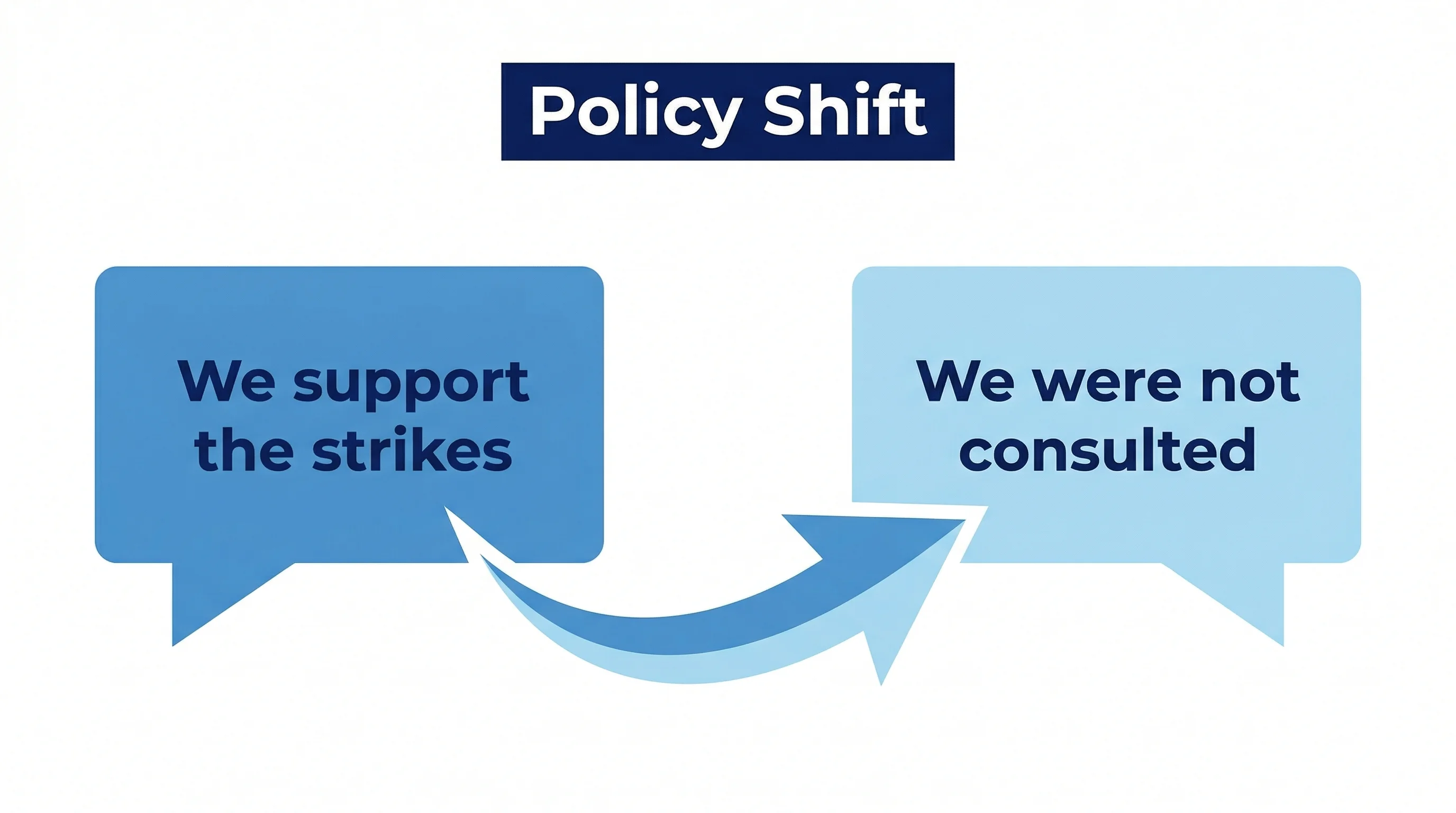
In early 2026, the United States and Israel launched strikes on Iran. Prime Minister Mark Carney and Foreign Affairs Minister Anita Anand put out a joint statement. Canada, they said, supports U.S. actions to prevent Iran from getting a nuclear weapon.
That was the position on record.
Within days, both of them shifted.
Carney expressed regret. He questioned whether the strikes were legal. He cited the failure of the international order. Anand went further — saying Canada was not consulted on the strikes, condemning attacks on civilians, and making it clear Canada had "no intention" of joining the military effort.
The core goal — stopping nuclear proliferation — never changed. But Canada went from ambiguous alignment with U.S. action to a firm, public distancing from it. That is a meaningful shift. PolicyShift recorded it as a moderate change for both politicians.
What caused it? The same thing that has been reshaping Canadian foreign policy for months: the recognition that blind alignment with Washington carries real political and moral risk.
Pierre Poilievre Stopped Looking South and Started Looking East
It is not just the governing Liberals who have shifted. The Conservatives have too.
In early 2026, Pierre Poilievre travelled to the United Kingdom and Germany. What he came back with was more than a photo op. He proposed a new framework for Commonwealth cooperation: mutual recognition of professional credentials, joint defence procurement, and a "critical minerals and energy compact" with allied nations — all tied to tariff-free trade.
Compare that to his earlier position, which focused on stabilizing Canada's relationship with the United States and building business ties through meetings and diplomacy.
The goal — strong international partnerships — is the same. But the approach has changed. Instead of looking to Washington first, Poilievre is building a Plan B. An alternative network of allies Canada could lean on if the U.S. relationship keeps getting harder.
PolicyShift recorded this as a moderate change. The direction behind it is hard to miss.
Canada's Defence Spending Jumped — By a Lot
For years, Canada's failure to meet NATO's two-percent-of-GDP defence spending target was a source of mild embarrassment. Then Donald Trump made it a source of real pressure.
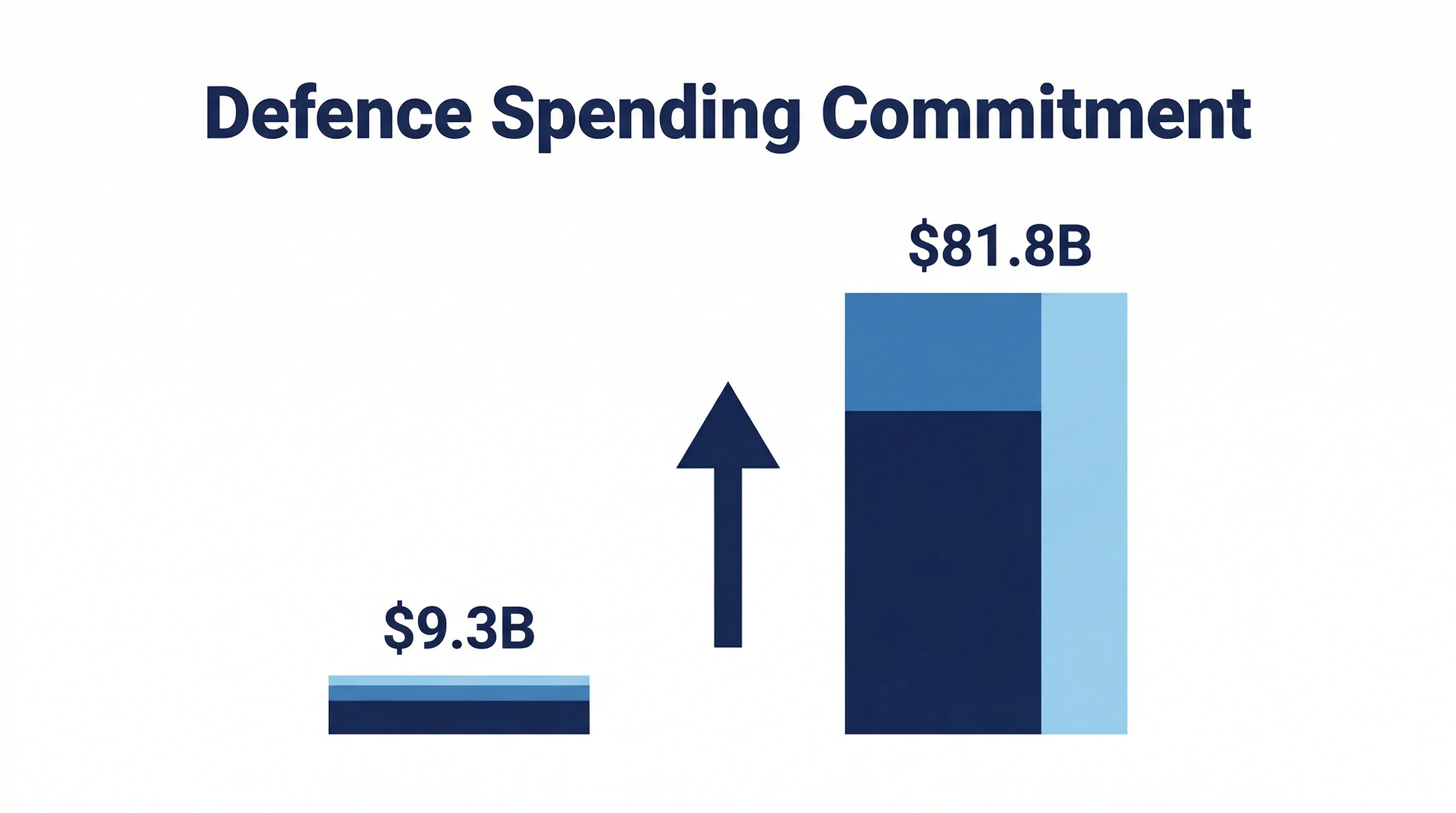
Mark Carney's position shifted dramatically on this one. His earlier stance committed to hitting the NATO target with a $9.3 billion boost to rebuild munitions. That sounded significant at the time.
His current position? $81.8 billion over five years. He called it "generational."
That is not a change in direction. It is a change in scale so large it barely resembles the original commitment. PolicyShift recorded it as a moderate change — the goal stayed the same, the size of the promise did not.
The EV Mandate Fell Because of Tariffs
Here is one that connects trade pressure directly to domestic policy.
Mark Carney paused Canada's electric vehicle sales mandate, then scrapped it entirely — replacing it with new emissions standards, consumer rebates, and a revised target of roughly 90% EV adoption by 2040. His reason, stated plainly: the auto industry already had "enough on their plate" because of U.S. tariffs.
The original mandate was a fixed, decade-long sales requirement. The replacement gives the industry flexibility. It is a softer policy, built for a harder trade environment.
This is a clear example of how American economic pressure reshaped a Canadian domestic file. Not just trade — emissions policy.
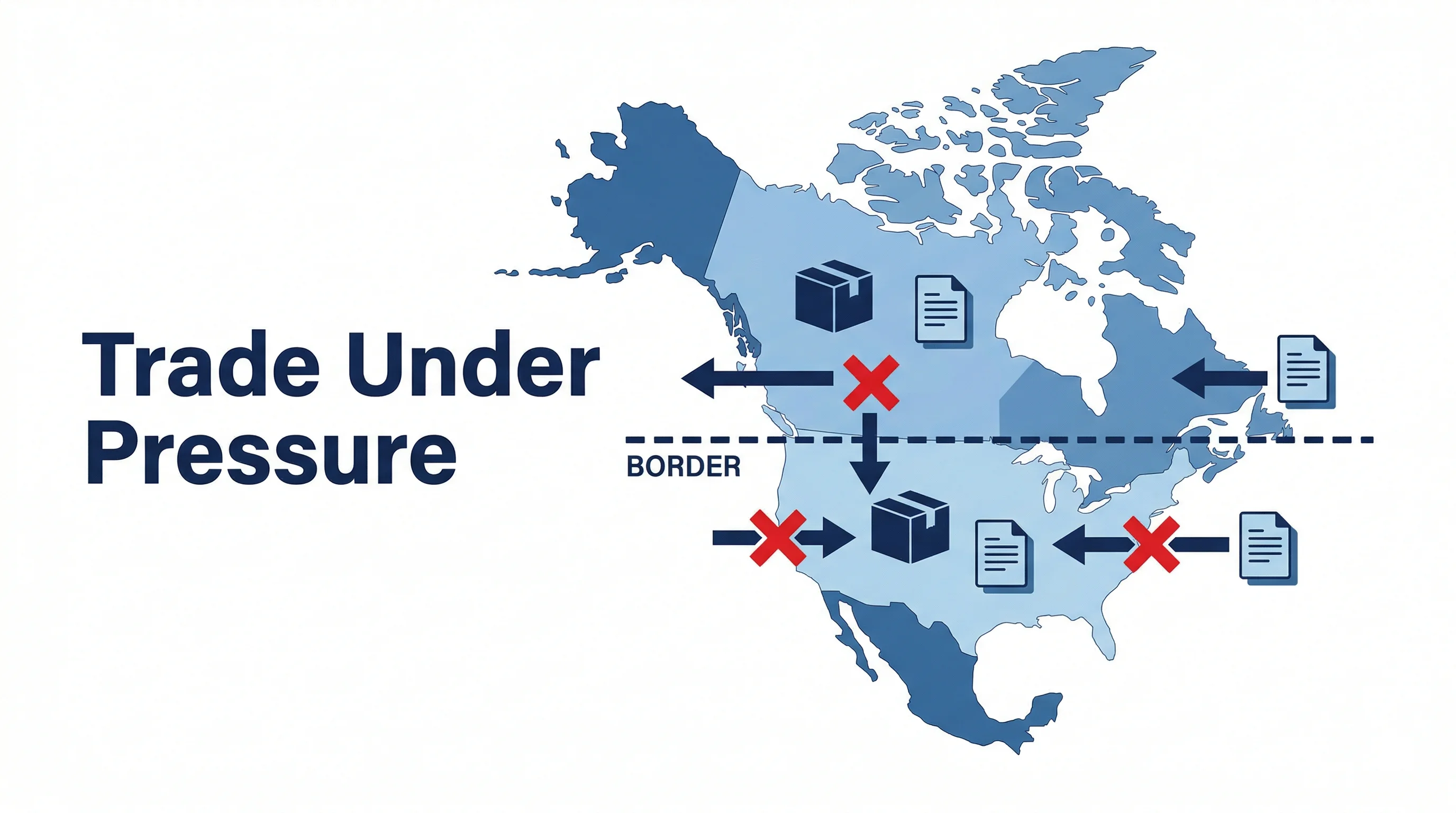
The Counter-Tariff Pivot
When the U.S. imposed tariffs on Canadian goods, Canada hit back with counter-tariffs. Carney's early position was to remove most of them — a cooperative, de-escalatory move, he said, that served Canada's economic interest.
Then the position narrowed. The current stance limits removal to counter-tariffs on goods specifically covered under CUSMA — the Canada-U.S.-Mexico trade agreement. That is a substantive change. The scope of Canada's concession got smaller.
Whether you read that as Canada holding firm or Canada walking back a generous offer depends on where you sit. PolicyShift does not take that call. We just show you what changed.
What All of This Adds Up To
Look at these shifts together and a pattern emerges.
Canada is recalibrating. On military spending, on trade concessions, on who to build alliances with, and even on whether to stand beside the U.S. in a war zone — the positions from twelve months ago are not the positions of today.
Some of that recalibration looks like strength. Some of it looks like retreat. That judgment belongs to you.
What PolicyShift gives you is the record. Not the spin. Not the press release. The actual shift — documented, sourced, and sitting in a politician's profile for anyone to check.
The Trump Effect is real. You can see it for yourself.